Arctic Research Journal · Space Weather & Spectral Physics Briefing
Northern Lights Science in Tromsø: Why Kp 0 Works at 69.65° N
How Tromsø’s 67.4° N geomagnetic latitude, southward IMF Bz magnetic reconnection, and 85–300 km atomic oxygen and nitrogen collisions produce emerald-green, crimson-red, and violet-blue auroras—and why 250 km 4×4 routing beats coastal clouds.
⚡ Key Space Weather & Spectral Altitude Summary
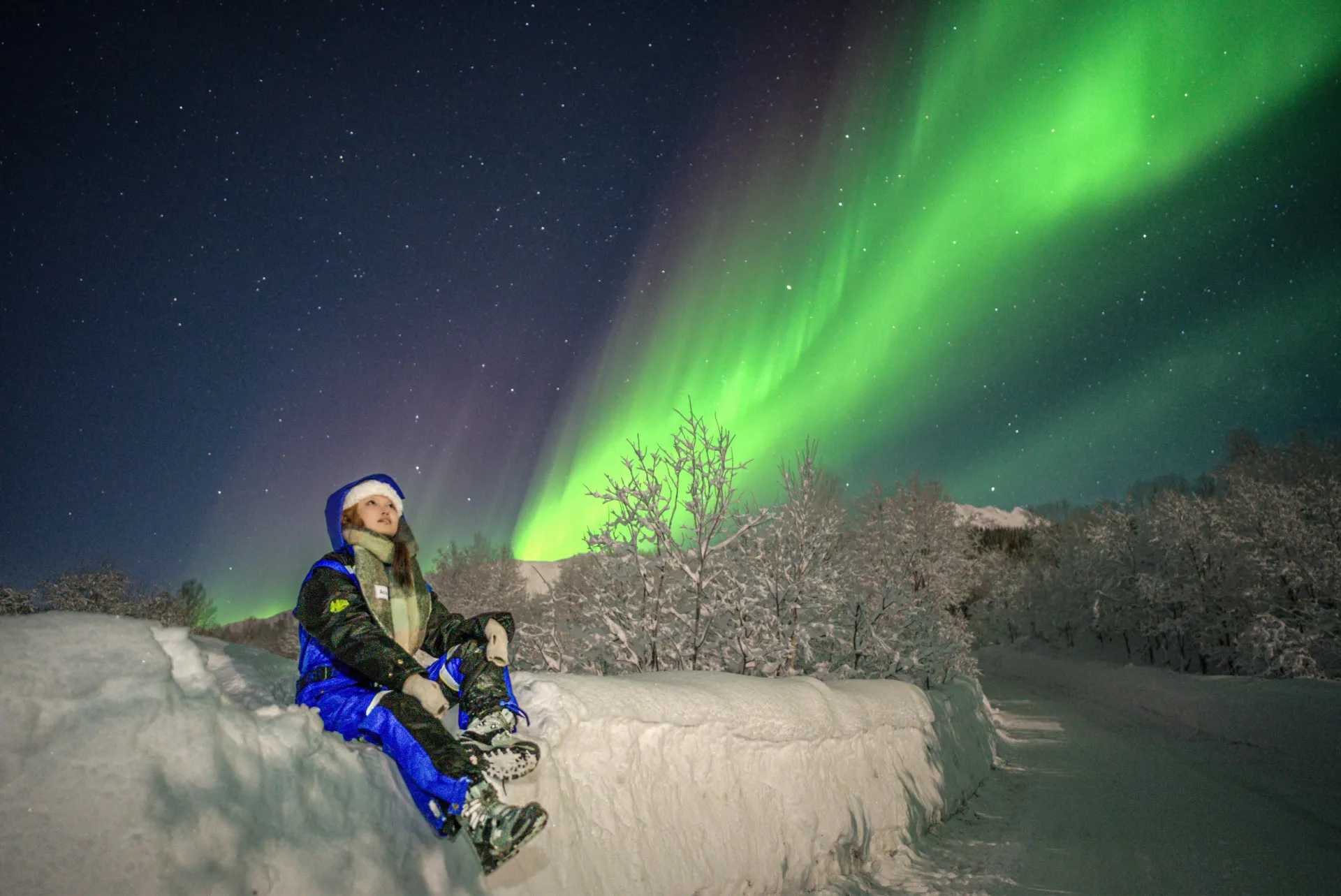
- 67.4° N Geomagnetic Latitude Advantage: Positioned at 69.65° N geographic (67.4° N geomagnetic) latitude, Tromsø sits directly beneath the quiet-time Auroral Oval—generating overhead displays even when consumer apps read Kp 0 or Kp 1.
- Southward IMF Bz & Spectral Altitudes: Real-time Lagrange 1 (L1) southward IMF Bz triggers magnetic reconnection, exciting atomic oxygen at 100–150 km (emerald green, 557.7 nm), atomic oxygen at 200–300 km (crimson red, 630.0 nm), and ionized molecular nitrogen below 100 km (violet-blue, 427.8 nm).
- 250 km Tri-Zonal Cloud Evasion (94% Sighting Rate): Exempt from EU Regulation 561/2006 Article 3(a) tachograph lockouts, our 8-guest 4×4 Sprinters bypass coastal cloud cover across 125+ turnouts into the 338 mm Skibotn rain shadow and Kilpisjärvi, Finland.
Travelers arriving in Tromsø frequently check consumer aurora apps and worry when the forecast displays "Kp 0" or "Kp 1." That concern stems from a misunderstanding of magnetospheric geometry. While mid-latitude regions such as Scotland, southern Scandinavia, or the northern United States require major geomagnetic storms (Kp 5 to Kp 8) to push the auroral oval southward, Tromsø sits directly underneath the permanent auroral belt.
1. The 67.4° N Geomagnetic Latitude Advantage
The Planetary K-index (Kp) is a 3-hour averaged global disturbance scale ranging from 0 to 9. Because Earth's magnetic dipole is tilted relative to its geographic axis, Tromsø’s geographic coordinates (69.6492° N, 18.9553° E) correspond to 67.4° N geomagnetic latitude.
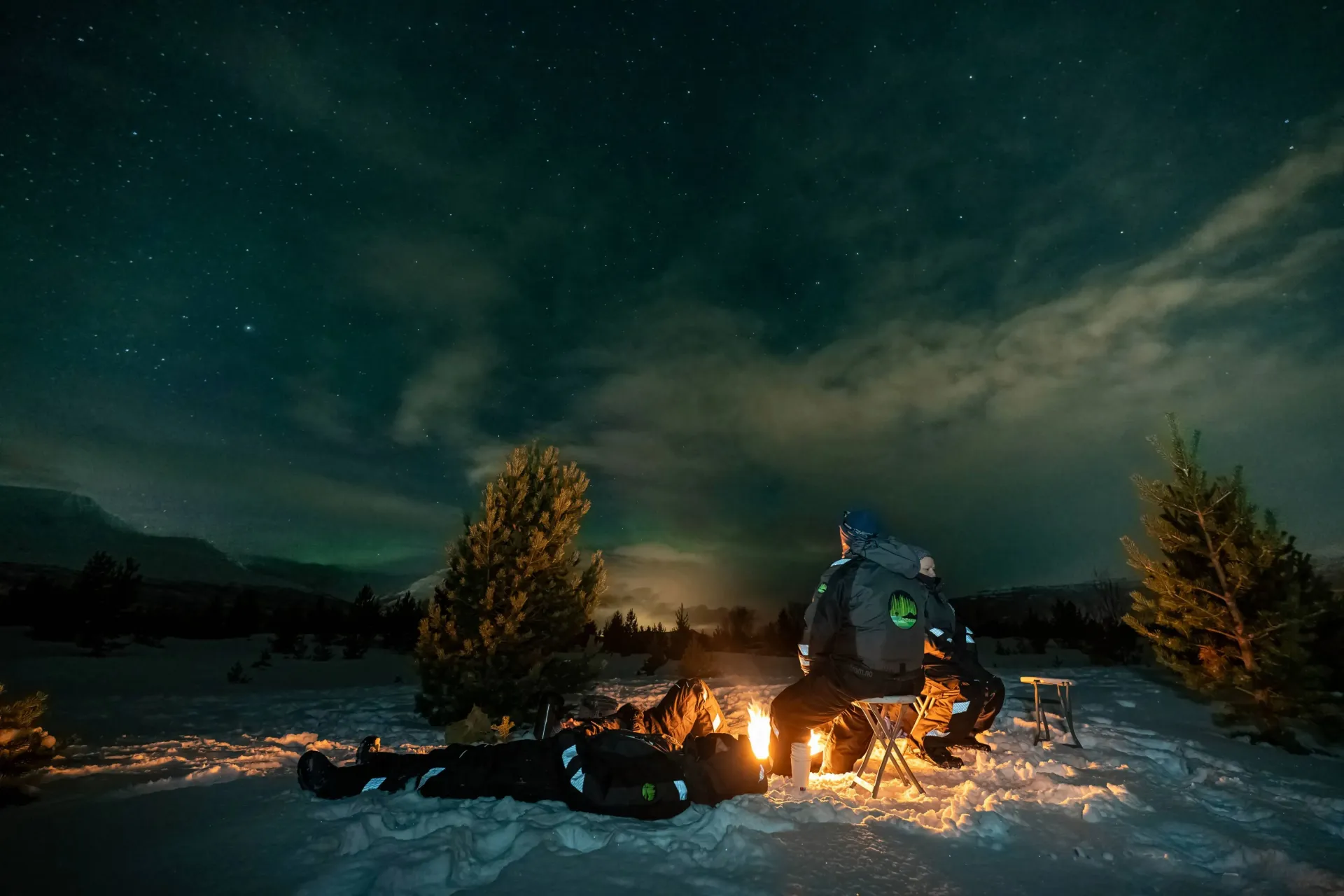
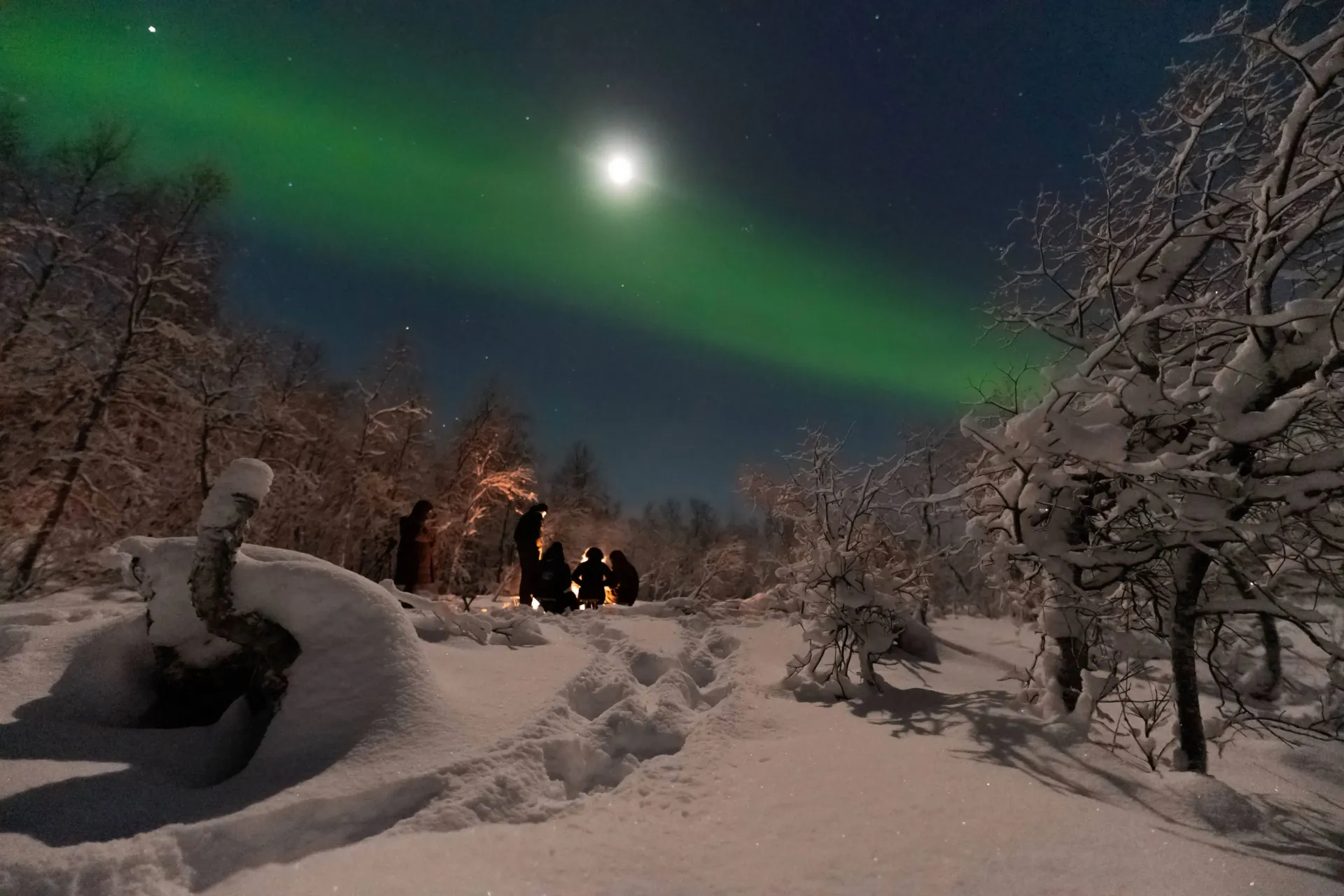
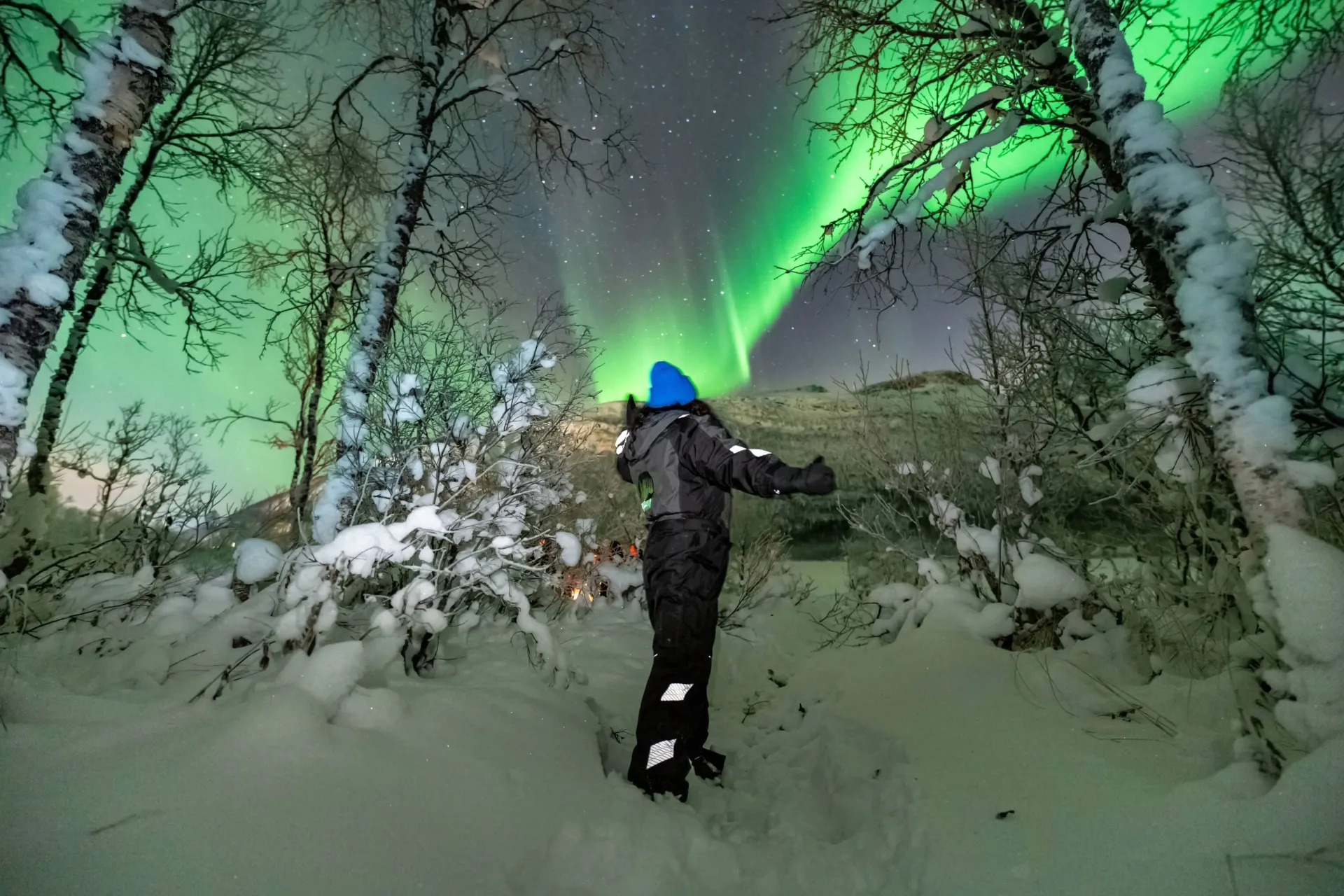
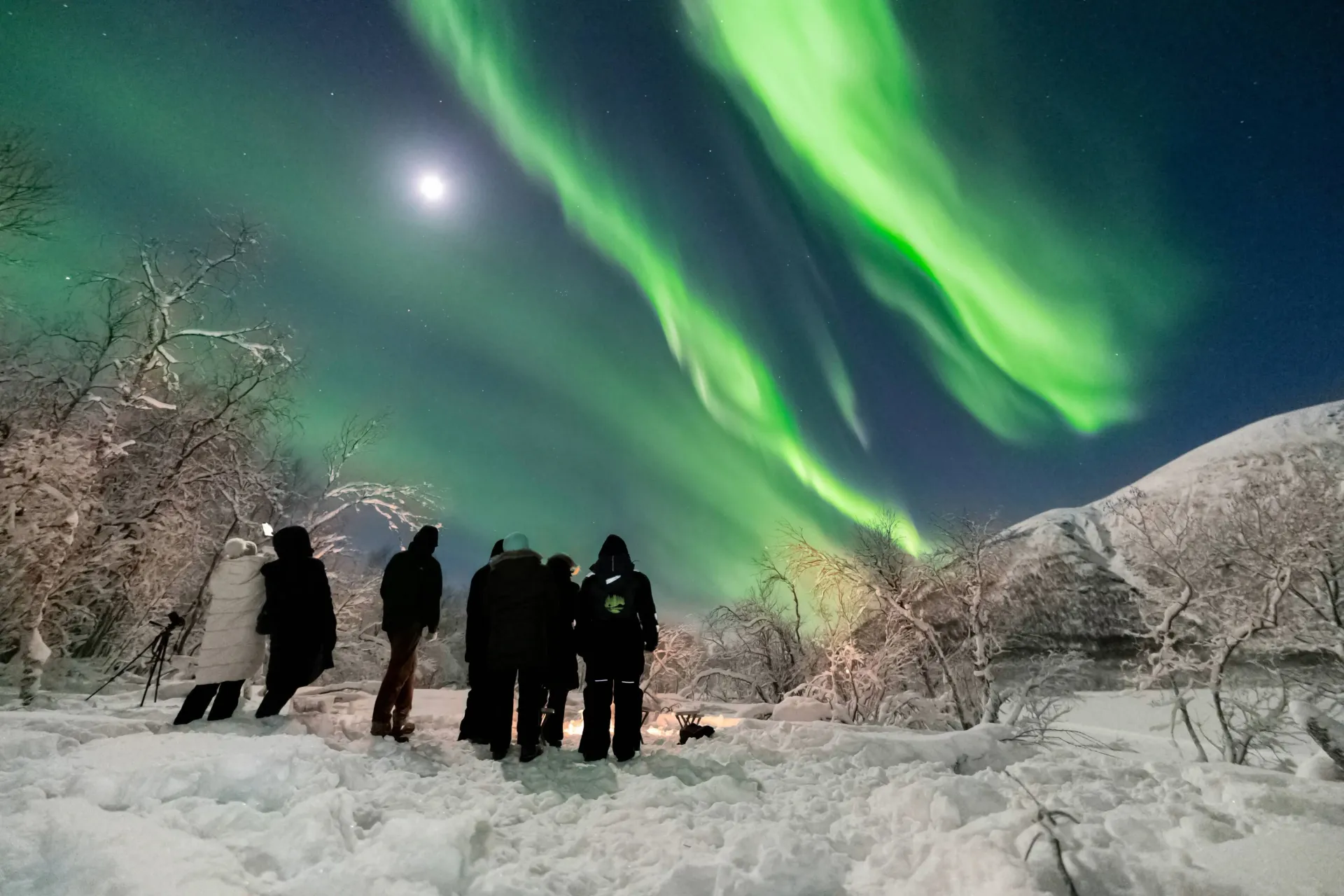
Solar wind plasma guided along closed magnetotail field lines precipitates into the upper atmosphere between 65° N and 70° N geomagnetic latitude every single night. Under clear skies in Tromsø, a Kp index of 0 or 1 is 100% sufficient to produce bright overhead auroral arcs and substorm coronas.
2. Southward IMF Bz & Why Auroras Glow Green, Red, and Blue
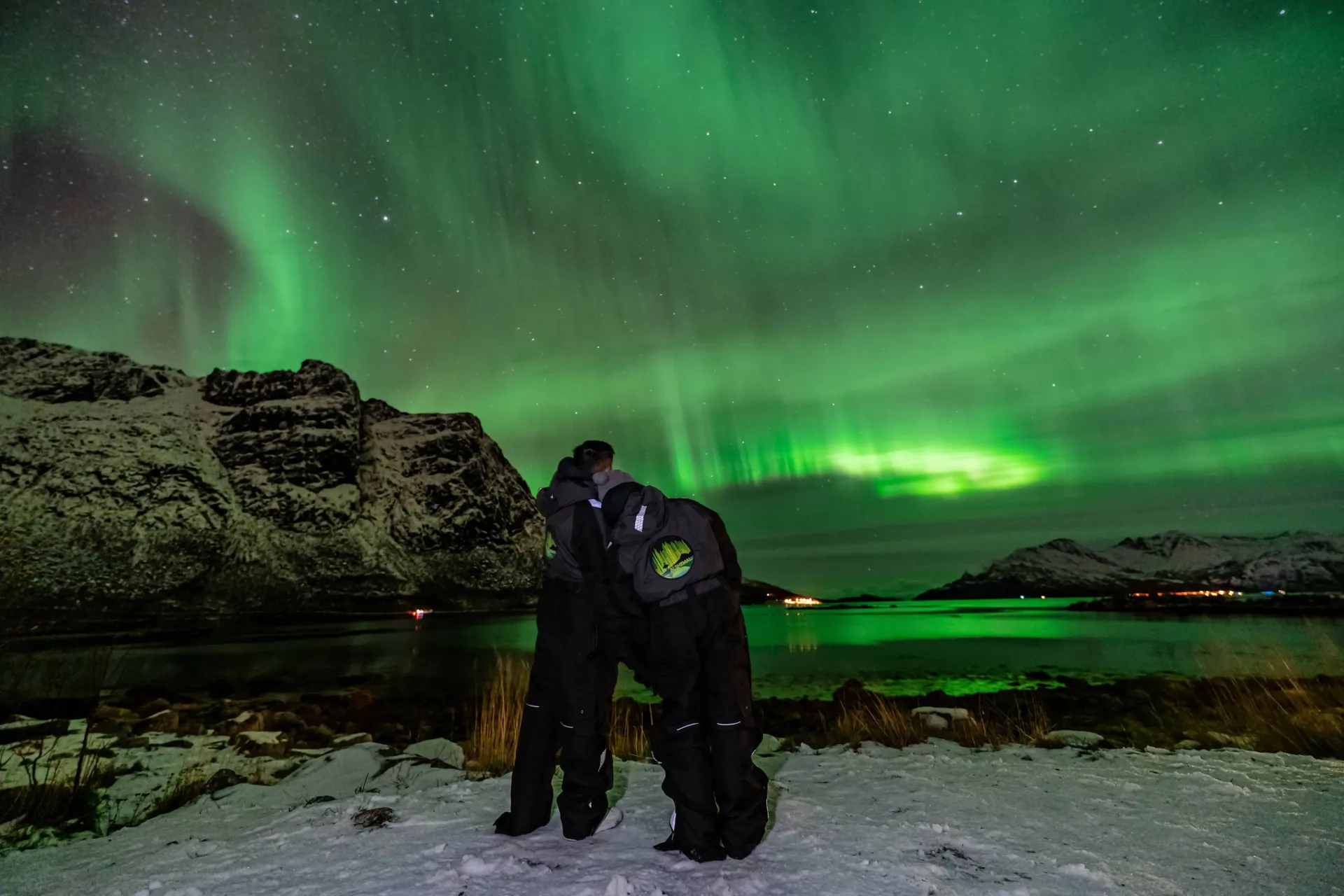
Instead of relying on lagging 3-hour Kp averages, our field spotters track real-time solar wind telemetry from the NOAA DSCOVR and NASA ACE spacecraft stationed 1.5 million kilometers upstream at the Lagrange 1 (L1) point(providing a 15 to 45 minute lead time). When the Interplanetary Magnetic Field tilts southward (negative Bz), it links with Earth's northward magnetosphere, funneling solar electrons into three distinct atmospheric altitude bands:
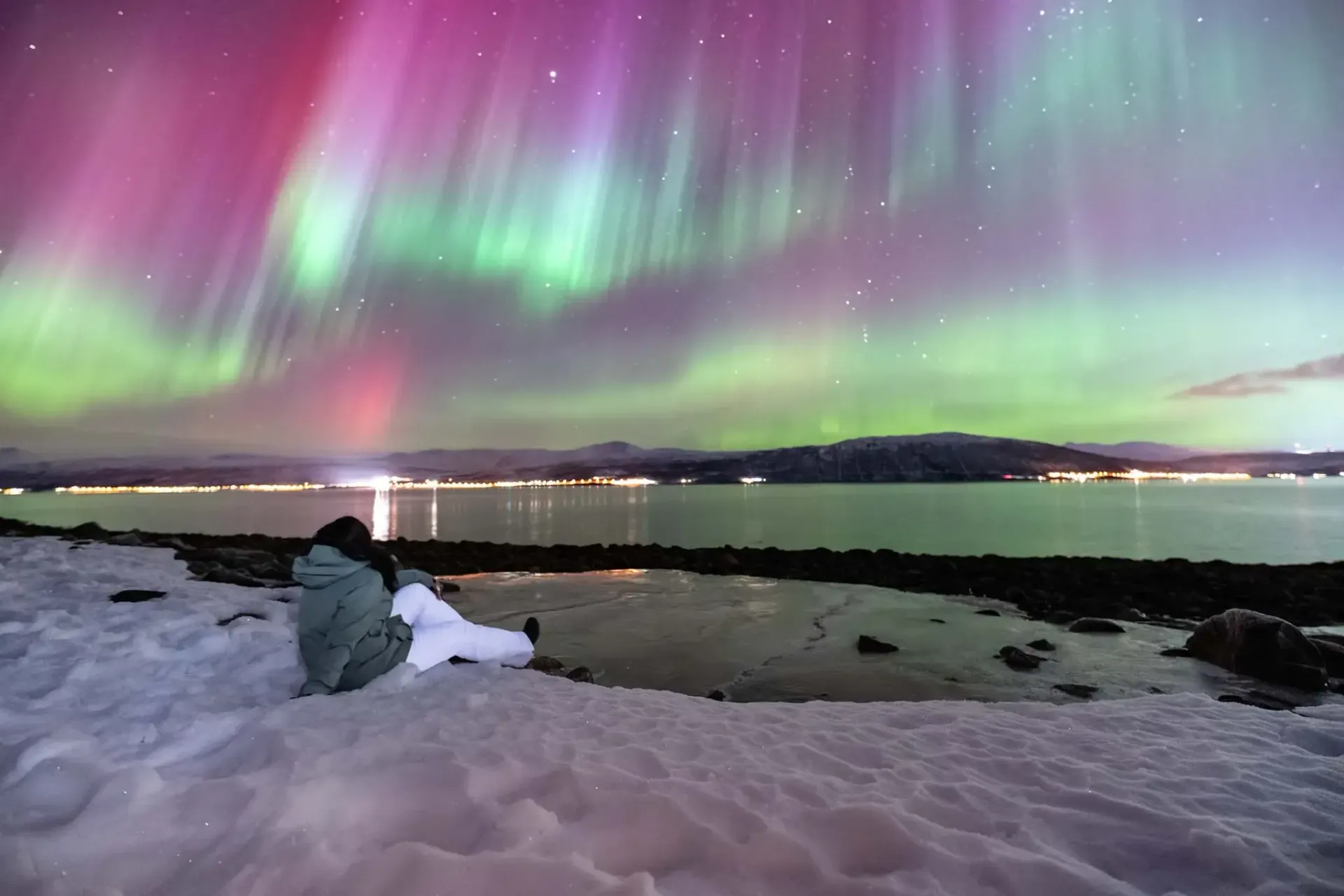
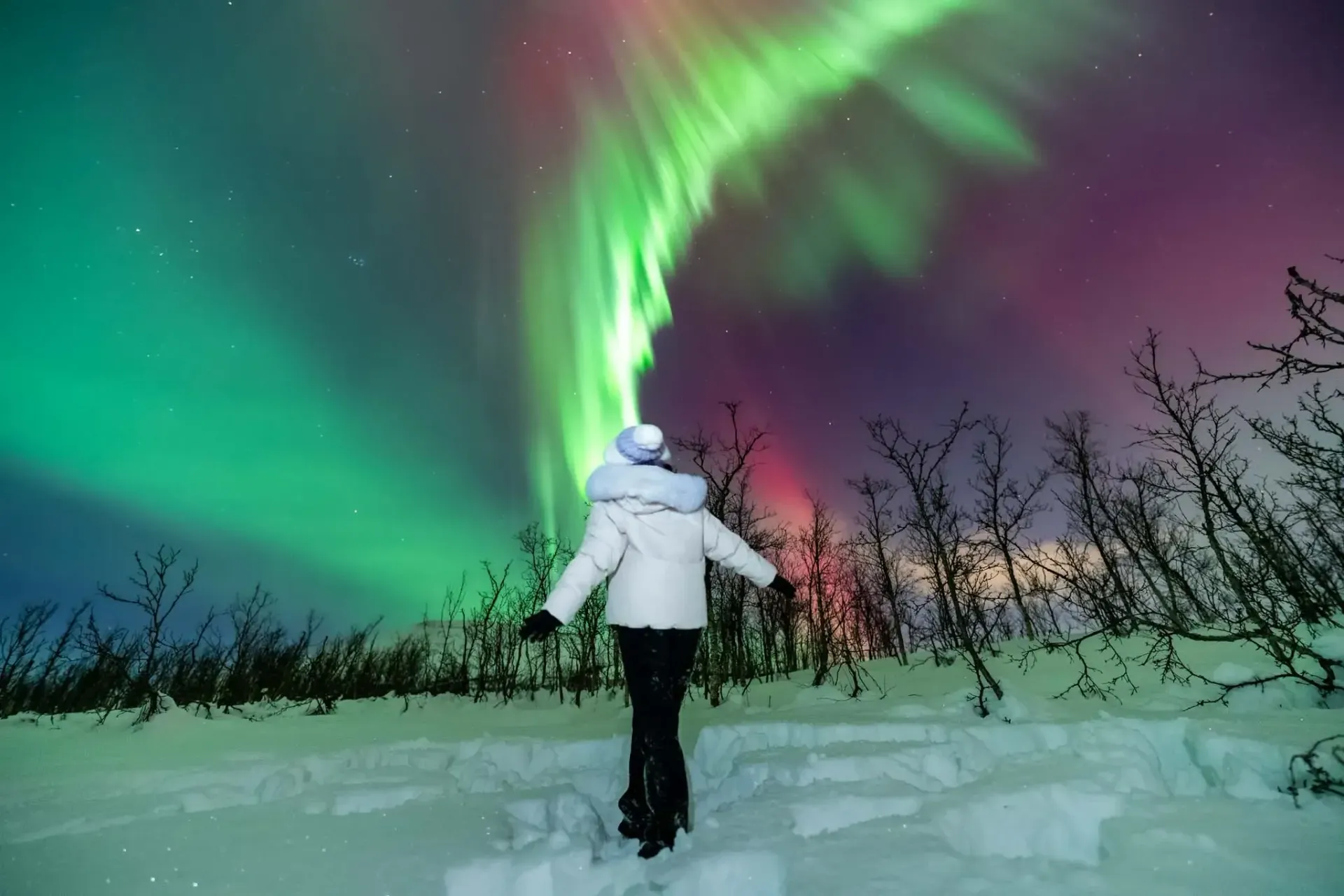
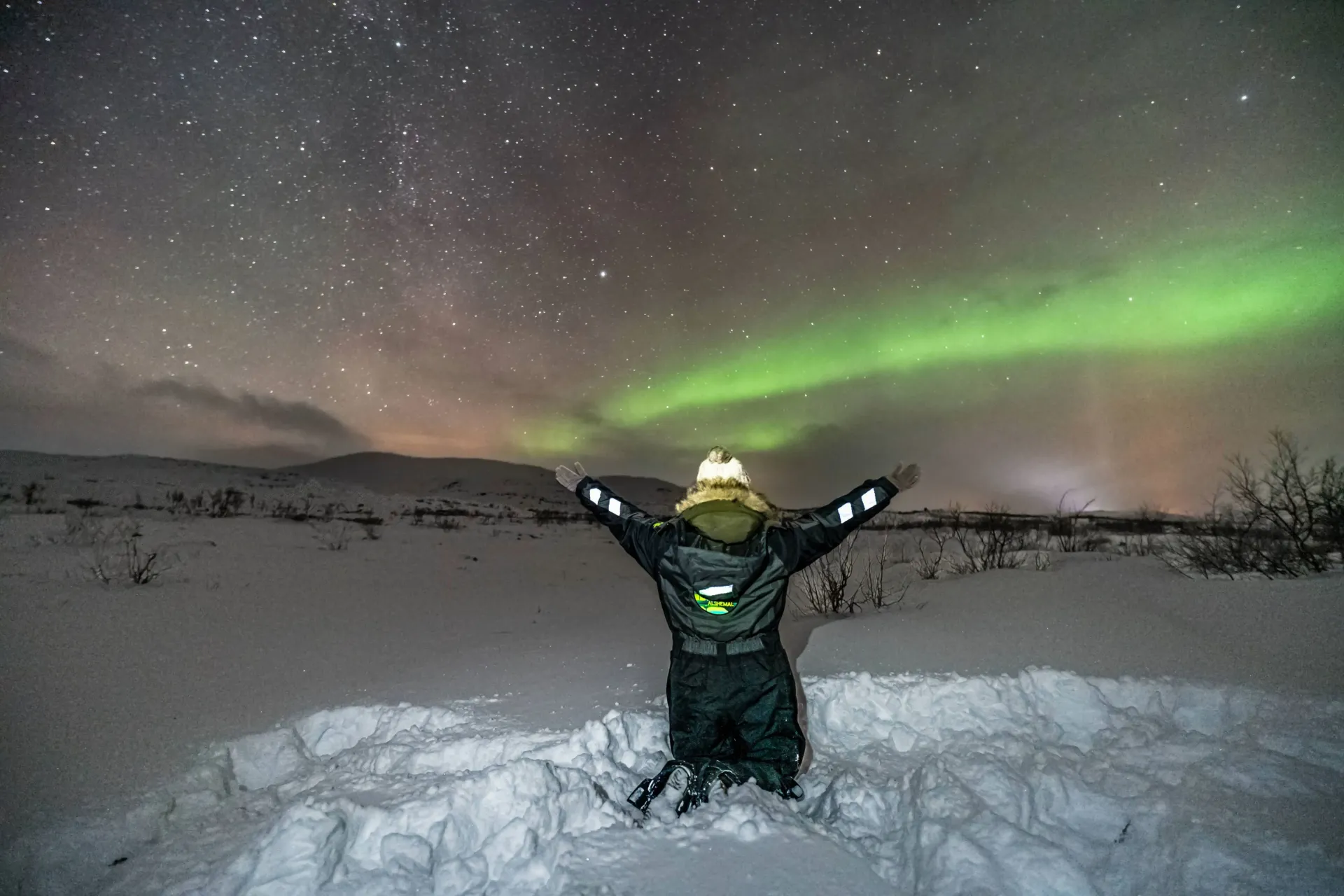
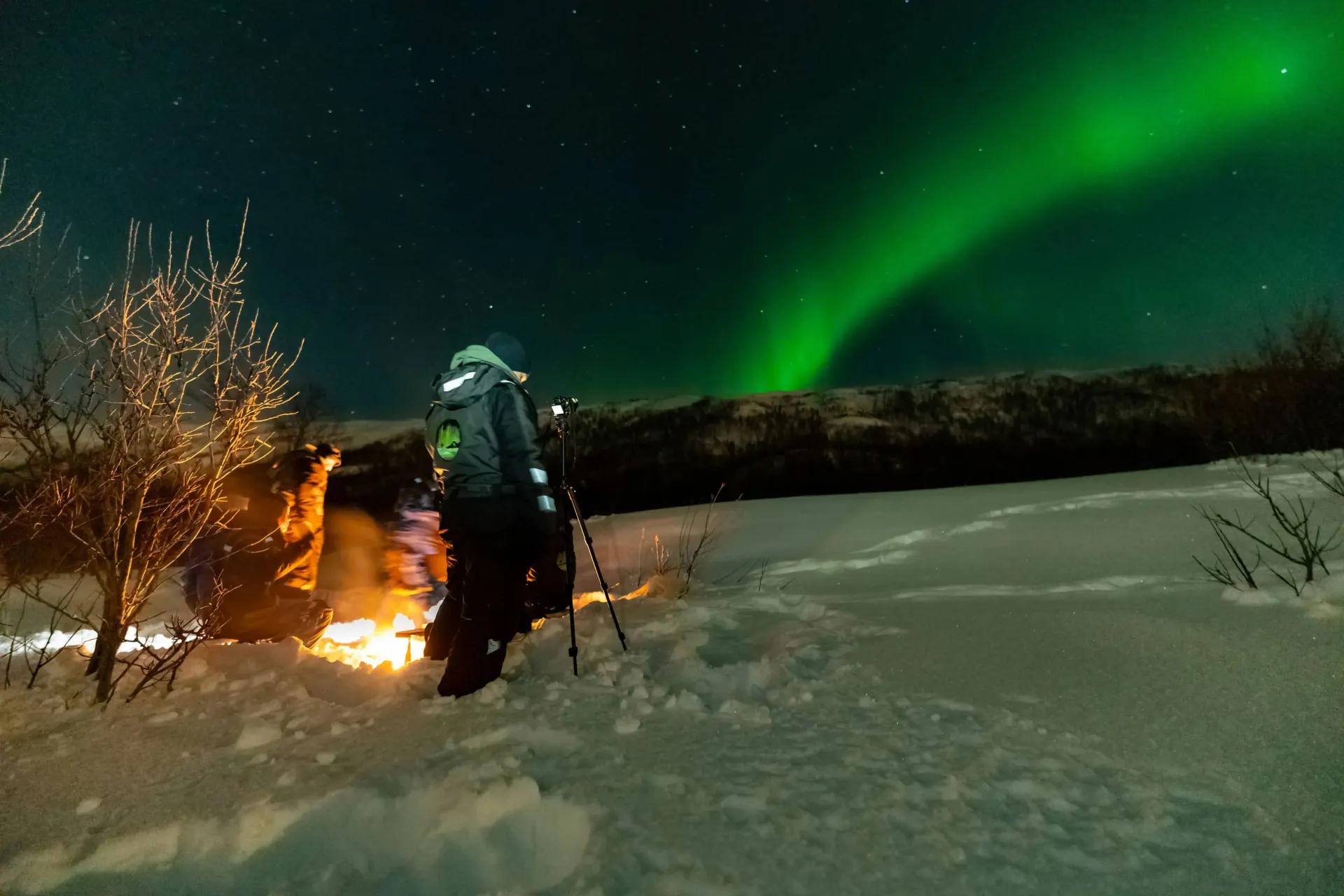
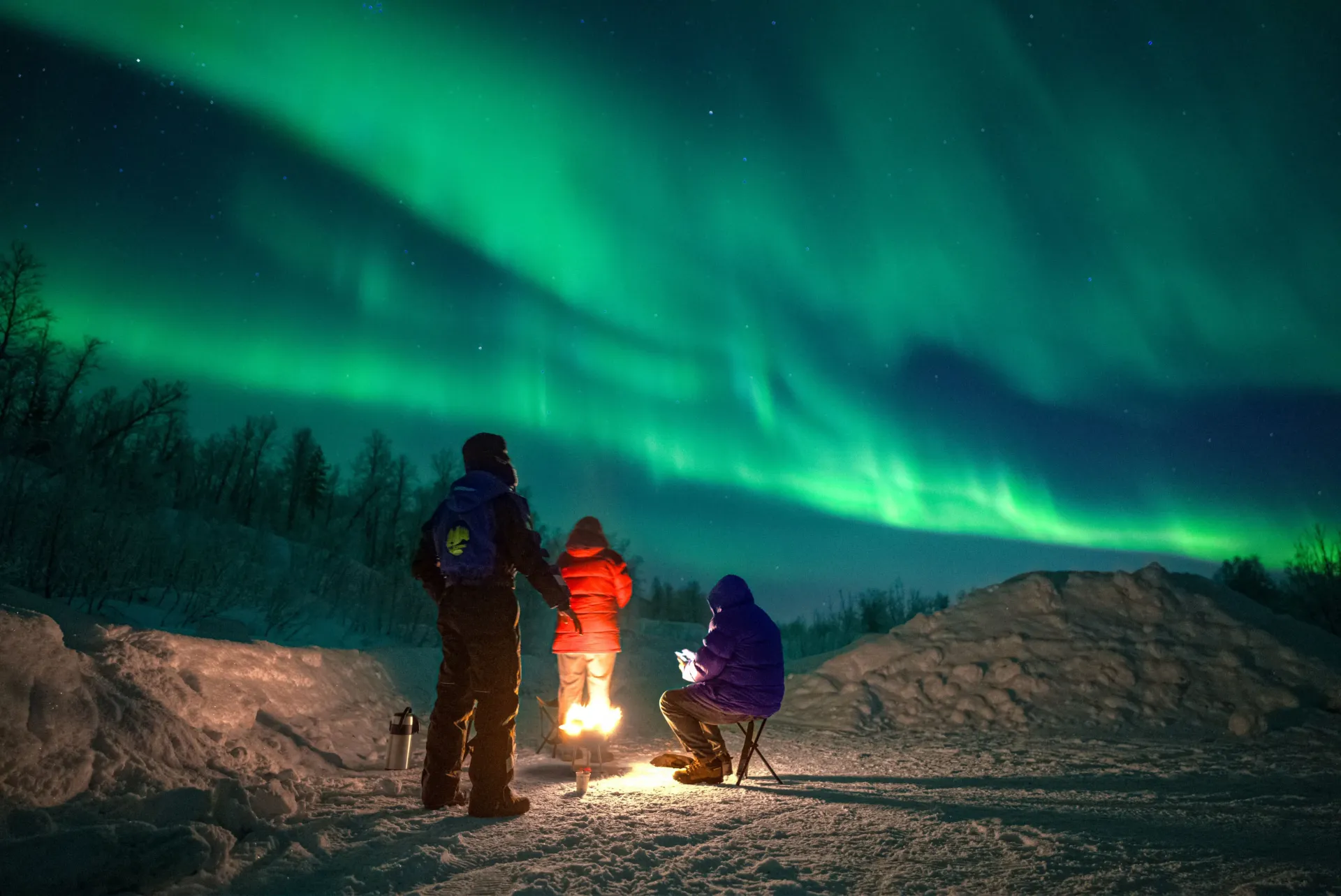
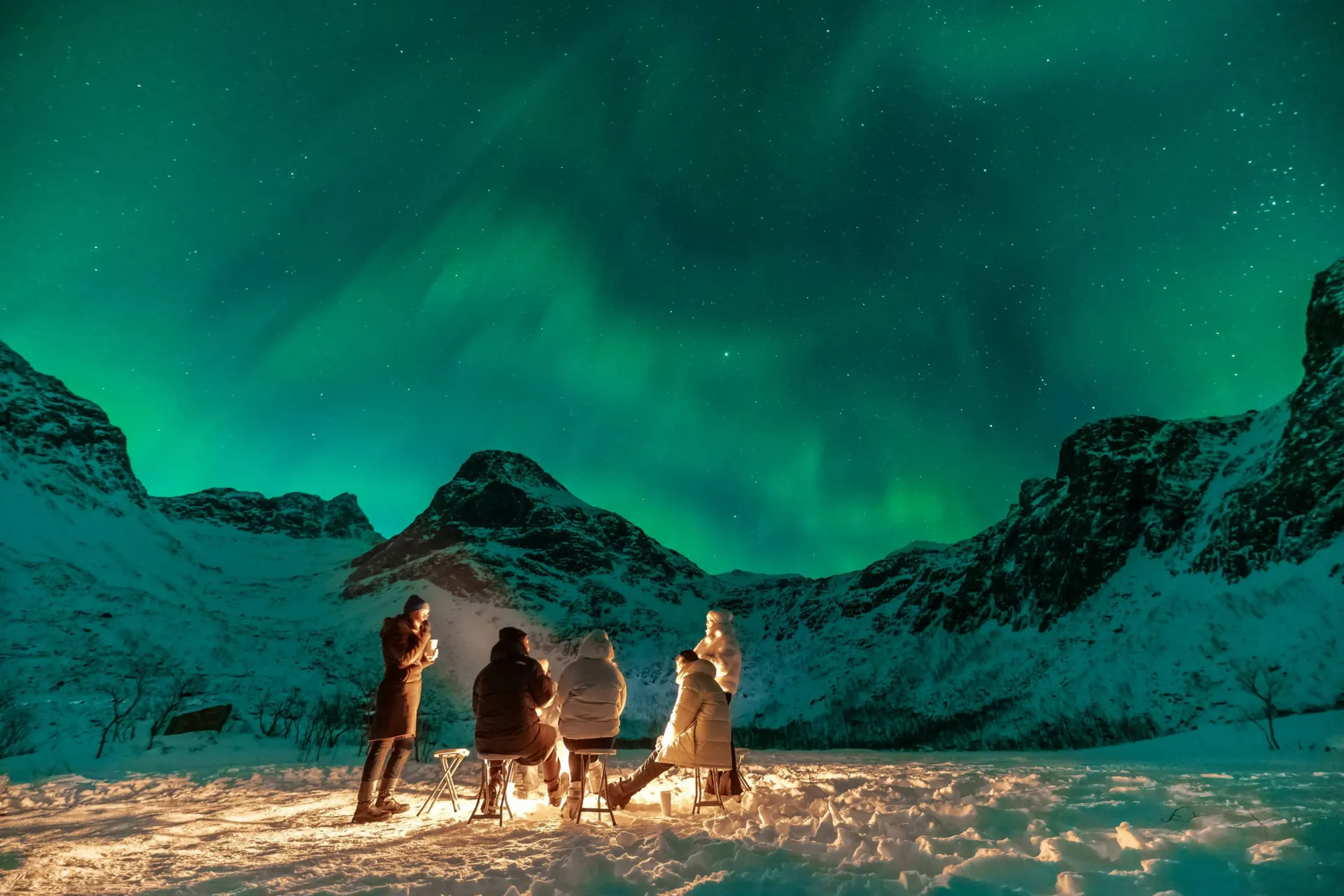
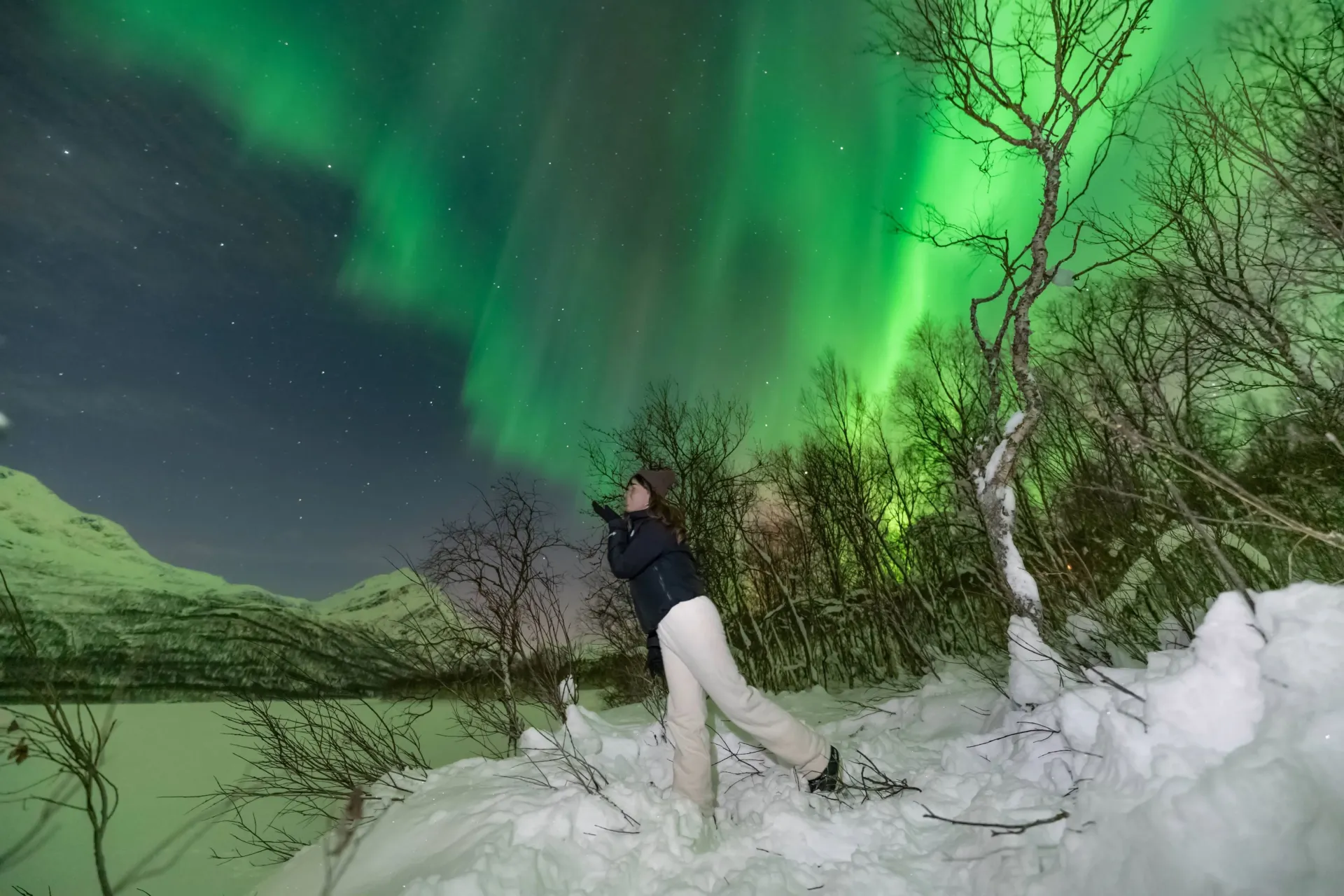
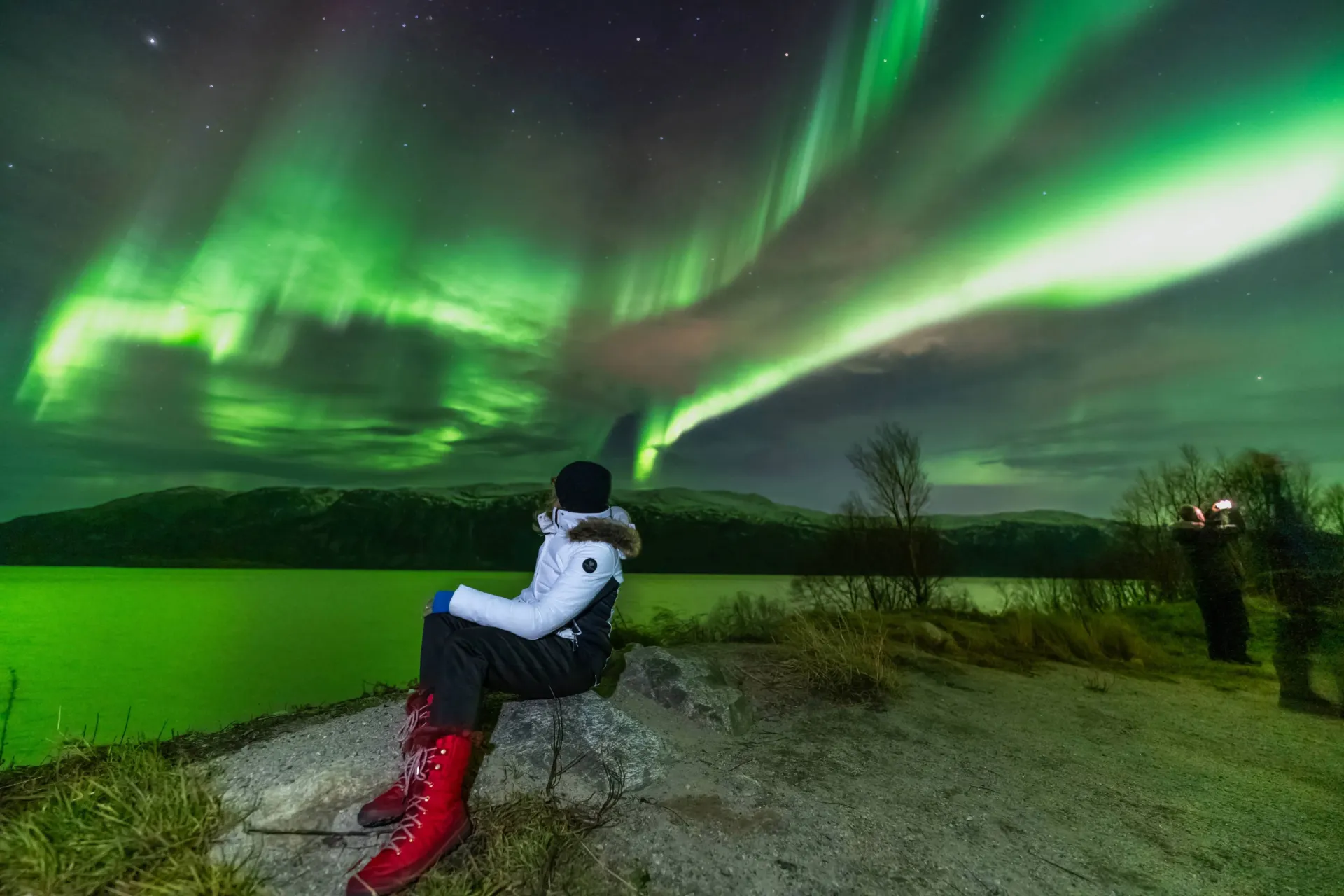
- 100–150 km Altitude — Emerald Green (Atomic Oxygen, 557.7 nm): The primary auroral emission band, where high-density atomic oxygen transitions release vibrant green photons visible to the naked eye even at Kp 0–1.
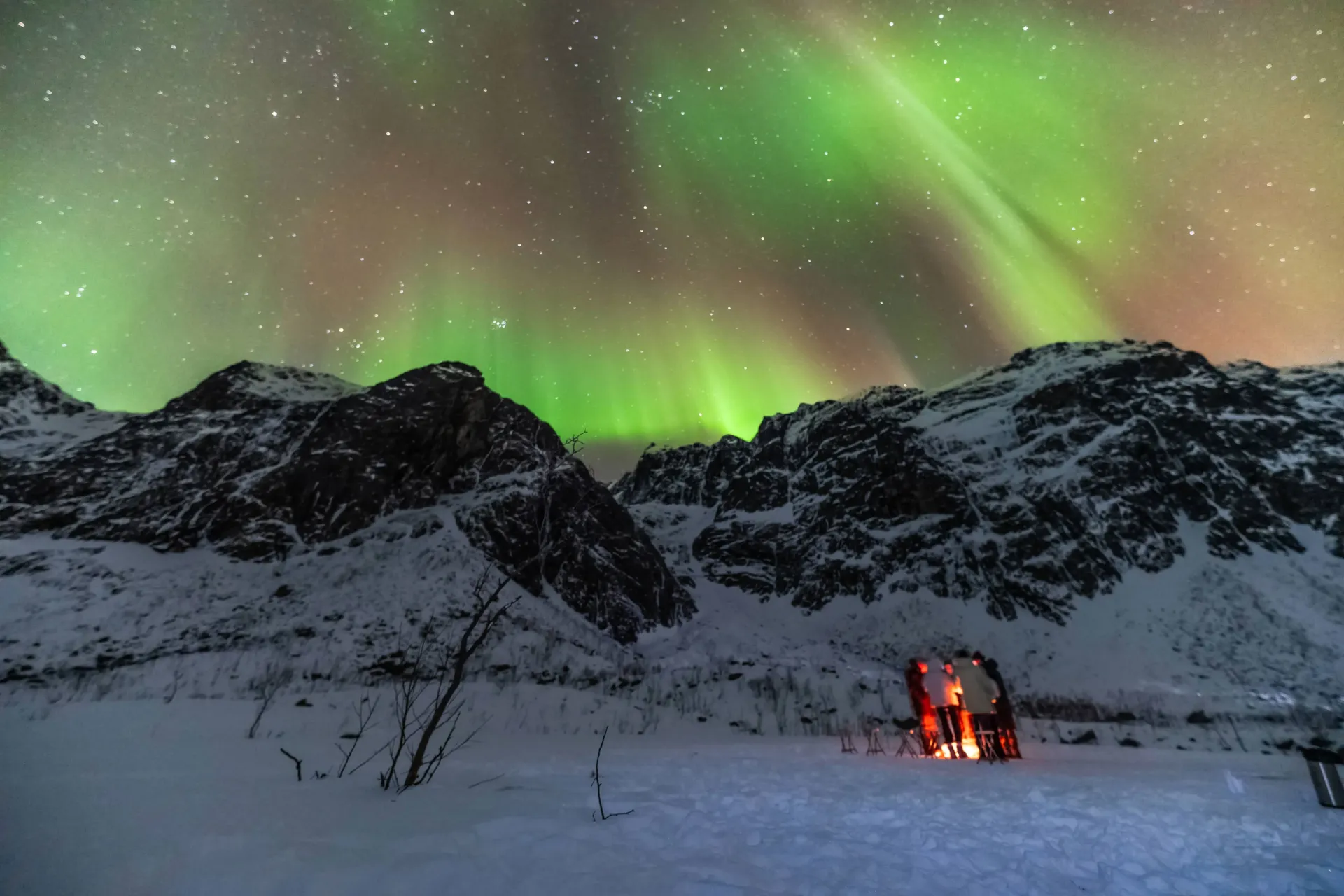
- 200–300 km Altitude — Crimson Red (Atomic Oxygen, 630.0 nm): In the ultra-thin upper thermosphere, excited atomic oxygen takes up to 110 seconds to emit a 630.0 nm crimson-red photon without collisional quenching—creating the rare red crowns captured in our video showcase below.
- 85–100 km Altitude — Violet, Magenta & Blue (Molecular Nitrogen, 427.8 nm): High-energy solar electrons penetrating below 100 km collide with ionized and neutral molecular nitrogen (N₂⁺ / N₂), producing fast-moving violet lower borders and deep blue twilight fringes.
3. The Real Bottleneck: 250 km Tri-Zonal Cloud Routing
At 69.65° N, the barrier to seeing the Northern Lights is almost never space weather—it is coastal cloud cover. Exempt from heavy-bus digital tachograph lockouts under EU Regulation (EC) No 561/2006 Article 3(a), our 8-guest 2026 Mercedes-Benz Sprinter 319 4×4 vans use live EUMETSAT infrared cloud radar to access 125+ wilderness turnouts across three distinct weather zones:
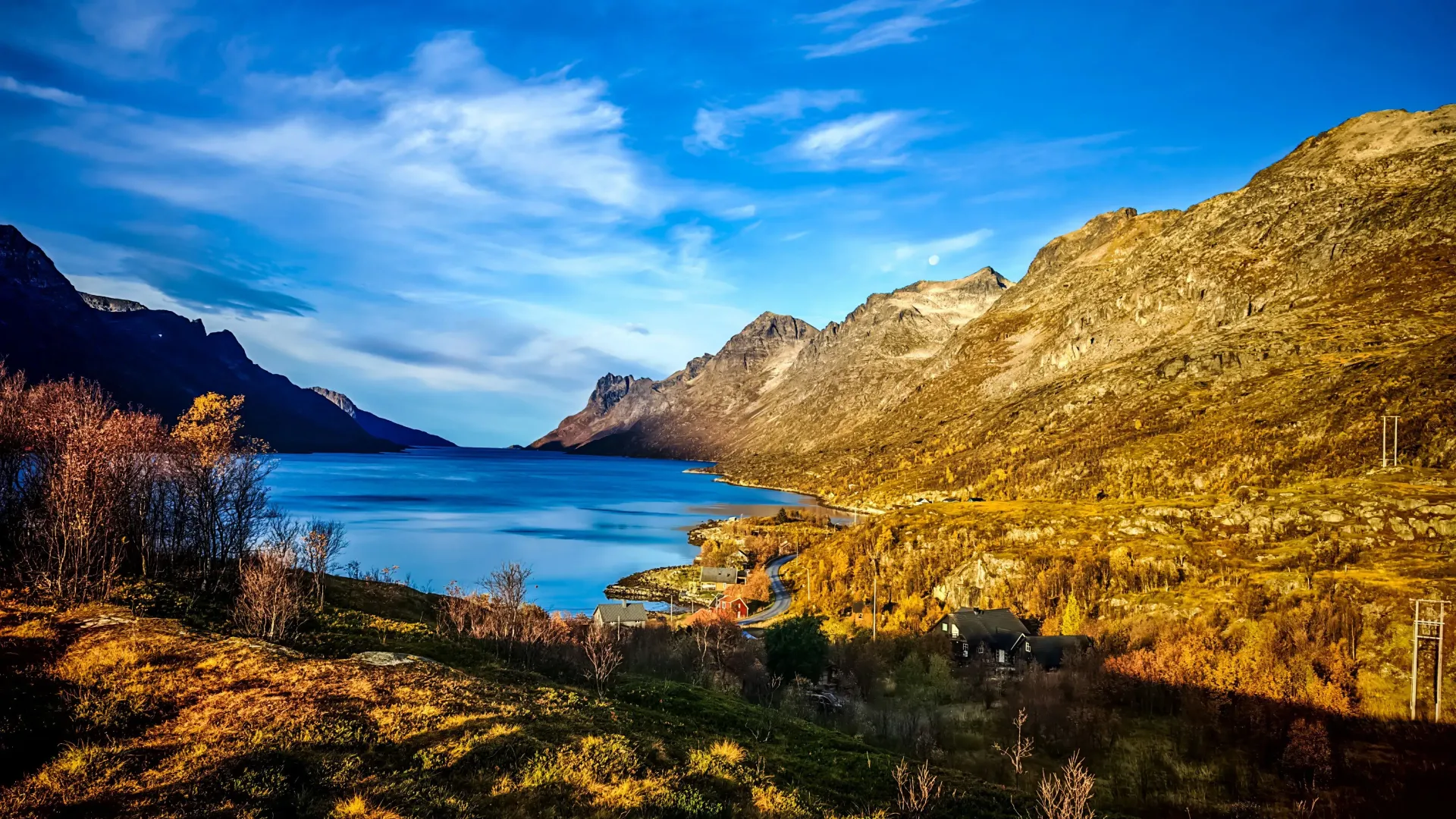
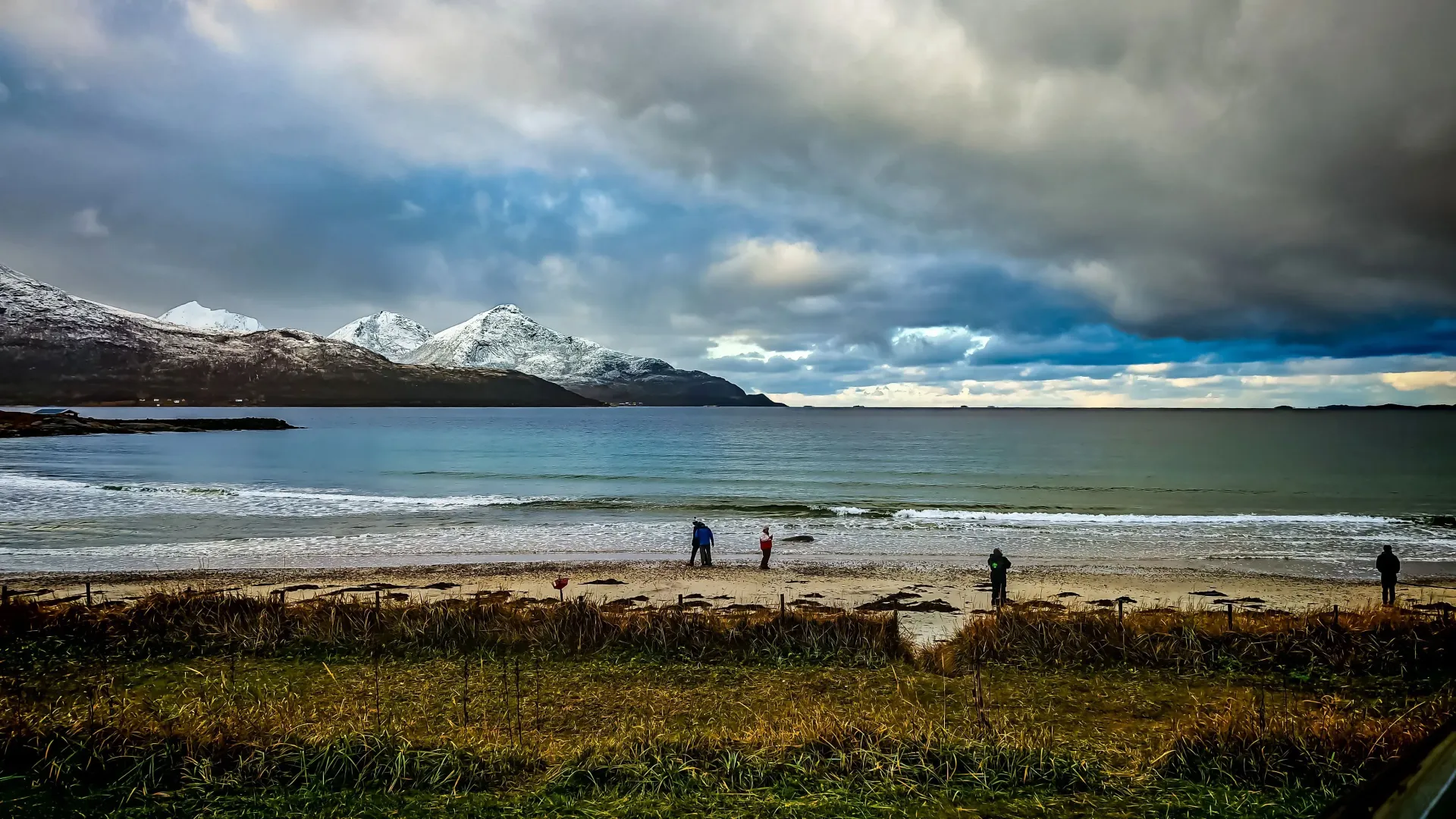
- Zone A (Coastal Fjords, 0–90 km): Kvaløya, Ersfjordbotn, and the Sommarøy archipelago when westerly maritime air is clear.
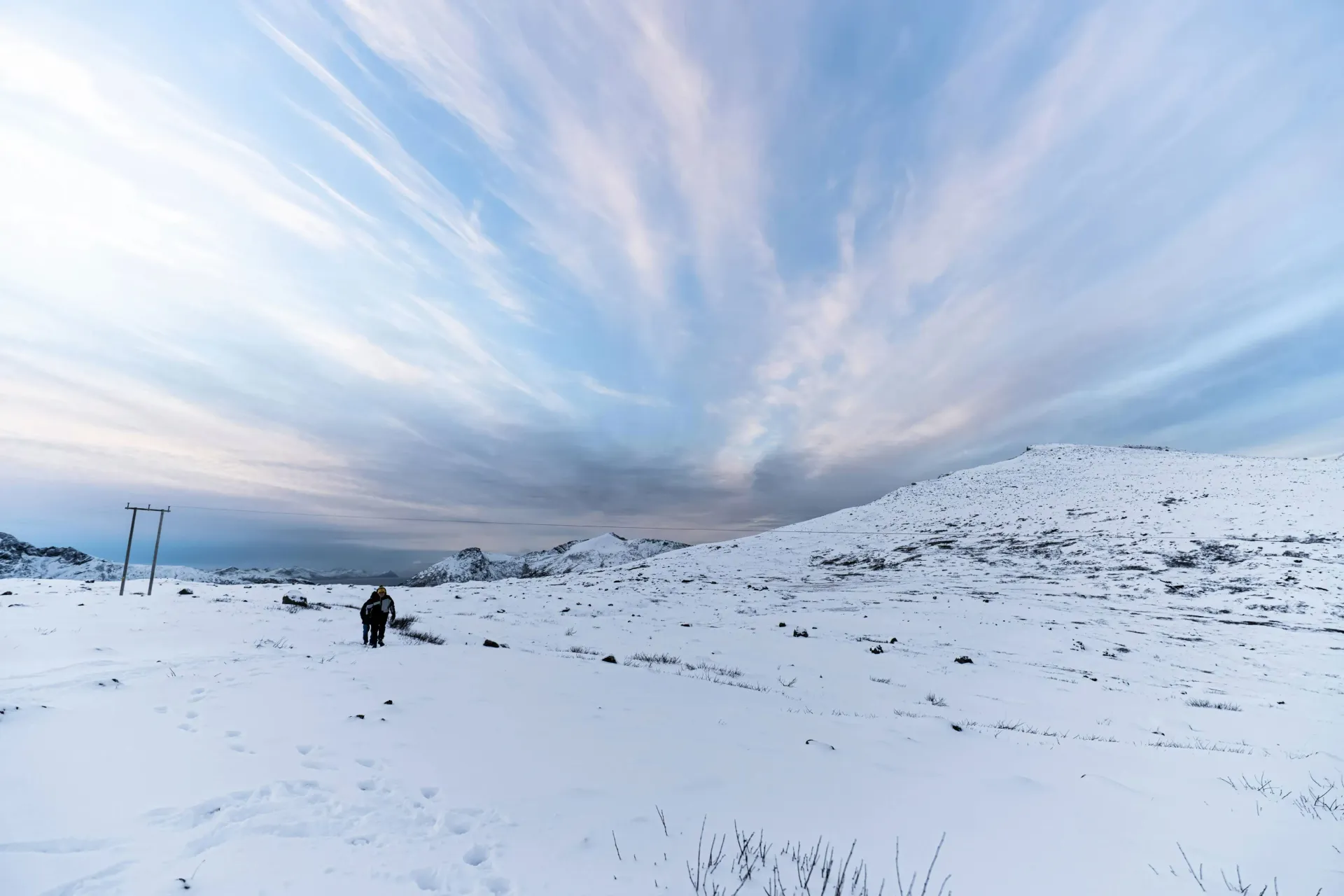
- Zone B (Inland Rain Shadow, 75–160 km): The Skibotn Valley behind the 1,800-meter Lyngen Alps, where adiabatic Foehn winds create a dry microclimate averaging only 338 mm of annual precipitation.
- Zone C (Continental Lapland, 160–250+ km): Cross-border via the E8 highway into sub-zero continental air at Kilpisjärvi, Finnish Lapland(valid passport or EU/EEA ID card required).
Compare our 8-Guest Northern Lights Minivan Chase (2,450 NOK per guest) and Private VIP / Sommarøy 4×4 Aurora Chase (15,000 NOK per group) on our Night Chases Hub, or inspect our nightly sensor logs on the Aurora RAW Photo Archive.
Technical & Statutory Verification Ledger — Space Weather & Fleet Specs
- Operator Legal Entity & HQ
- Alshemal Norway Koussa (Org.nr 933 773 205 / VAT NO933773205MVA) · Storgata 150, 9008 Tromsø (+47 411 95 982)
- Geomagnetic Latitude & Kp 0 Rule
- 69.6492° N, 18.9553° E (67.4° N Geomagnetic) · Directly beneath the quiet-time Auroral Oval (overhead displays at Kp 0–1)
- Spectral Altitude Bands
- 200–300 km Red Oxygen (630.0 nm) · 100–150 km Green Oxygen (557.7 nm) · 85–100 km Violet/Blue Nitrogen (427.8 nm)
- L1 Telemetry & 250 km Tri-Zonal Range
- Live DSCOVR/ACE IMF Bz + EUMETSAT cloud routing across 125+ turnouts (Kvaløya, Skibotn 338 mm rain shadow & Kilpisjärvi, Finland)
- Night Chase Pricing & EU Exemption
- 2,450 NOK / guest Shared (max 8 guests, 10+ yrs) · 15,000 NOK Private VIP · Exempt from tachographs under EU Reg 561/2006 Art. 3(a)
- Fleet Hardware & +21°C Cabin Heat
- 2026 Mercedes-Benz Sprinter 319 4×4 · Nokian studded winter tires & 5.5 kW Webasto Air Top Evo 55 (+21°C engine-off heater)
- Included -40°C Suits vs. Exclusions
- -40°C Regatta Thermo-Cruiser suits (Adult XS–XXXL & Youth 110–145 cm) + 24h RAW/JPEG photos included · Winter boots, tripods & hot meals excluded
- Licensing, Insurance & Cancellation
- Turvognløyve Licensed · If Skadeforsikring Policy SP7991172.1.2 (Bilansvarslova § 4 Unlimited Personal Injury / 100M NOK Property) · 24h 100% fee-free refund · 0.5% to Stripe Climate
Frequently Asked Questions: Kp 0 Physics, IMF Bz & Aurora Colors
Can you see the Northern Lights overhead in Tromsø when the forecast says Kp 0 or Kp 1?
Yes. Because Tromsø sits at 69.65° N geographic (67.4° N geomagnetic) latitude directly beneath the central Auroral Oval, a Kp index of 0 or 1 is completely sufficient to produce bright overhead Northern Lights whenever the Interplanetary Magnetic Field (IMF Bz) tilts southward and skies are clear.
What causes the Northern Lights to glow emerald green, crimson red, and violet-blue?
Aurora colors depend on the atmospheric gas and altitude where solar electrons collide: atomic oxygen between 100 and 150 km produces the classic 557.7 nm emerald green; atomic oxygen above 200 to 300 km produces rare 630.0 nm crimson-red crowns; and ionized molecular nitrogen below 100 km produces 427.8 nm violet and blue lower fringes.